

Understanding Medigap Policies and Eligibility
Even as we get older, our healthcare needs tend to improve, and so do the expenses that are included with them. Medicare helps cover some medical expenses, nonetheless it doesn't cover everything. That's where Medicare Plan G come in. These plans, also called Medigap, help fill the gaps in Medicare coverage, which means you don't have to cover out of pocket for things such as coinsurance, copayments, or deductibles.
In this short article, we'll explain what Medicare Supplement Plans are, what they cover, and how they change from other forms of health insurance. We'll also discuss the various kinds of Medigap policies available, and what you should look at when selecting a plan.

What're Medicare Supplement Plans?
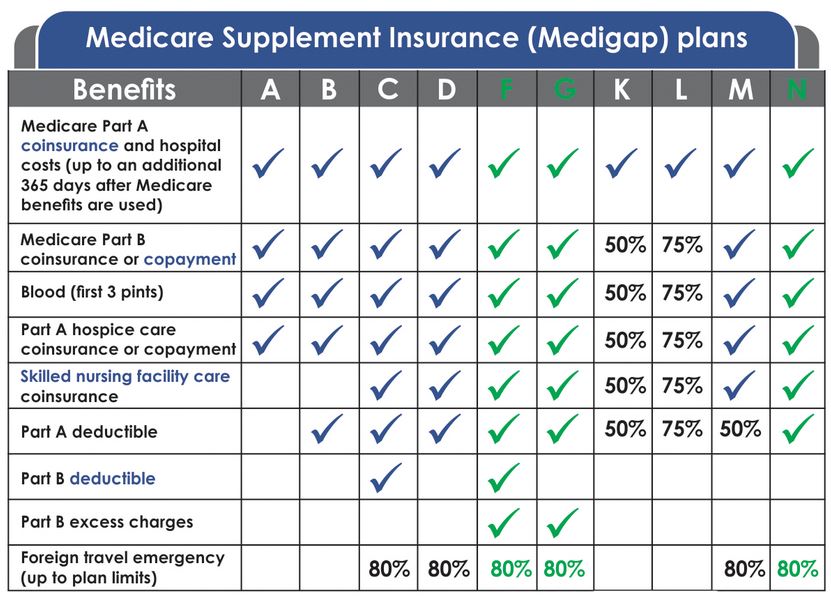
Medicare Supplement Plans are private insurance policies that help buy expenses that are not included in Original Medicare. You will find ten standardized Medigap policies available, labeled A, B, C, D, F, G, K, L, M, and N. Each plan offers a different amount of coverage, but all plans must cover the exact same basic benefits, including:
- Part A coinsurance and hospital costs as much as one more 365 days after Medicare benefits are exhausted
- Part B coinsurance or copayment
- Part A hospice care coinsurance or copayment
- Blood (first three pints)
- Skilled Nursing Facility (SNF) care coinsurance
- Part A deductible
- Part B deductible (for Plans C and F only)
- Part B excess charges (for Plans G and F only)
- Foreign travel emergency (up to plan limits)
What do Medicare Supplement Plans Cover?
Each plan provides a different set of benefits, and some offer additional coverage beyond the basic benefits. For instance, Plans F and G are the absolute most comprehensive Medigap policies, covering every one of the basic benefits plus Part B excess charges, which will be the total amount a doctor or supplier in excess of the Medicare-approved amount can charge. These plans also cover foreign travel emergencies up to the program limits, which can be important for those who travel frequently. Other plans, like Plans K and L, offer lower premiums but require more out-of-pocket expenses.
Just how do Medicare Supplement Plans change from other forms of medical insurance?
Medicare Supplement Plans are very different from other kinds of health insurance, such as Medicare Advantage plans. Medicare Advantage plans are given by private insurance companies, and they supply all your Medicare benefits, including Part A, Part B, and often Part D (prescription drug coverage). Medicare Advantage plans may also provide additional benefits like dental or vision coverage. While they may have lower premiums, they likewise have higher out-of-pocket expenses and can have significantly more restrictions on which providers you are able to see.
Another difference between Medicare Supplement Plans and Medicare Advantage plans is that Medigap policies use Original Medicare, while Medicare Advantage plans replace it. Which means that with a Medigap policy, you can see any doctor or provider that accepts Medicare, whereas with a Medicare Advantage plan, perhaps you are limited by a network of providers.
What should you see when selecting a Medicare Supplement Plan?
Whenever choosing a Medicare Supplement Plan, there are several factors to consider. First, consider your healthcare needs and budget. When you have a chronic condition or need frequent medical care, you may want a far more comprehensive plan like F or G. If you're healthy and don't expect to need much medical care, an agenda with lower premiums like K or L may become more affordable.
It's also wise to consider the price of the master plan, like the premiums and out-of-pocket expenses like deductibles and copayments. While an agenda with lower premiums may appear attractive, it could have higher out-of-pocket expenses that may wind up costing you more in the long run.
Lastly, consider the insurance company offering the plan. Choose a reputable insurer with a strong financial rating, and check their customer care ratings as well. Choosing an idea from an excellent insurer may save a lot of frustration in the future when you have to file a claim or have other conditions together with your policy.
Conclusion:
In conclusion, understanding Medicare Supplement Plans could be a bit overwhelming, but it's a significant element of protecting your healthcare needs as you receive older. Whenever choosing an idea, consider your healthcare needs and budget, and compare plans from reputable insurers to find the best fit for you. By selecting the proper plan for your needs, you are able to enjoy greater peace of mind and avoid unexpected medical expenses.